How a bike shop, everyday conversations, and an open-handed approach are creating opportunities for ministry in Catania.
The mission field is not standing still.
Here in Sicily, the people who live in our neighborhoods—and the people who pass through them—are changing. Cities like Catania bring together Sicilians, immigrants, refugees, international students, and people from across Africa, South Asia, and the Middle East. Some arrive hoping to build a new life. Others are passing through on their way somewhere else.
For those of us committed to making disciples and strengthening local churches, this raises an important question: How do we make disciples when the people, the culture, and the opportunities around us keep changing?
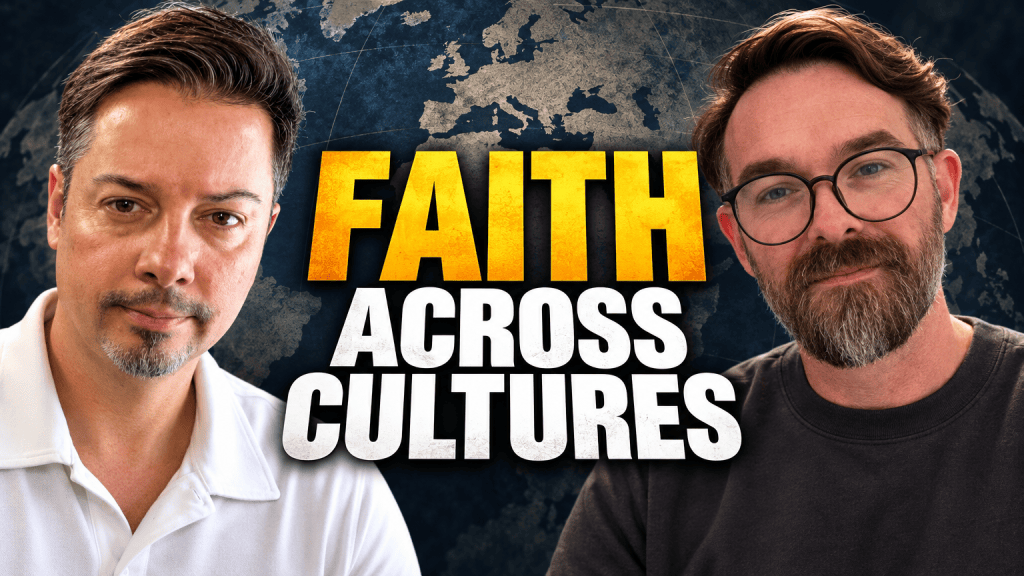
That question was at the heart of my conversation with Joshua Holmes on the Mission Sicily Podcast. Joshua serves alongside his family and local ministry partners in Catania, where an unexpected tool—a bike shop—has become a place for building relationships, serving the community, and sharing the gospel.
His story offers a practical look at cross-cultural ministry and a reminder that while our methods may need to change, our mission remains the same.
The World Is Coming to Sicily
For many people, Sicily is a destination. For others, it is a stopping point on a longer journey.
Catania’s changing population brings together people with different languages, cultures, religious backgrounds, and life experiences. That diversity creates opportunities for meaningful relationships, but it also presents challenges for anyone trying to help people grow in faith.
Some people Joshua meets may remain in Catania for years. Others may leave after a few months—or even sooner. A conversation that begins today might need to continue by phone or video call after someone moves to another part of Italy or Europe.
This changes how we think about discipleship.
We often imagine discipleship happening through regular gatherings, shared routines, and long-term relationships. Those things matter. But what happens when someone’s circumstances make that kind of consistency difficult?
Sometimes discipleship means meeting one-on-one, making a phone call, opening the Scriptures together, or helping a new believer connect with other Christians before moving on. It means making the most of the time God gives us with each person, while helping them develop the faith and relationships they need to keep growing.
The challenge is not simply to reach people who are passing through. It is to help them become disciples who can make disciples wherever God leads them next.
A Bike Shop with a Bigger Purpose
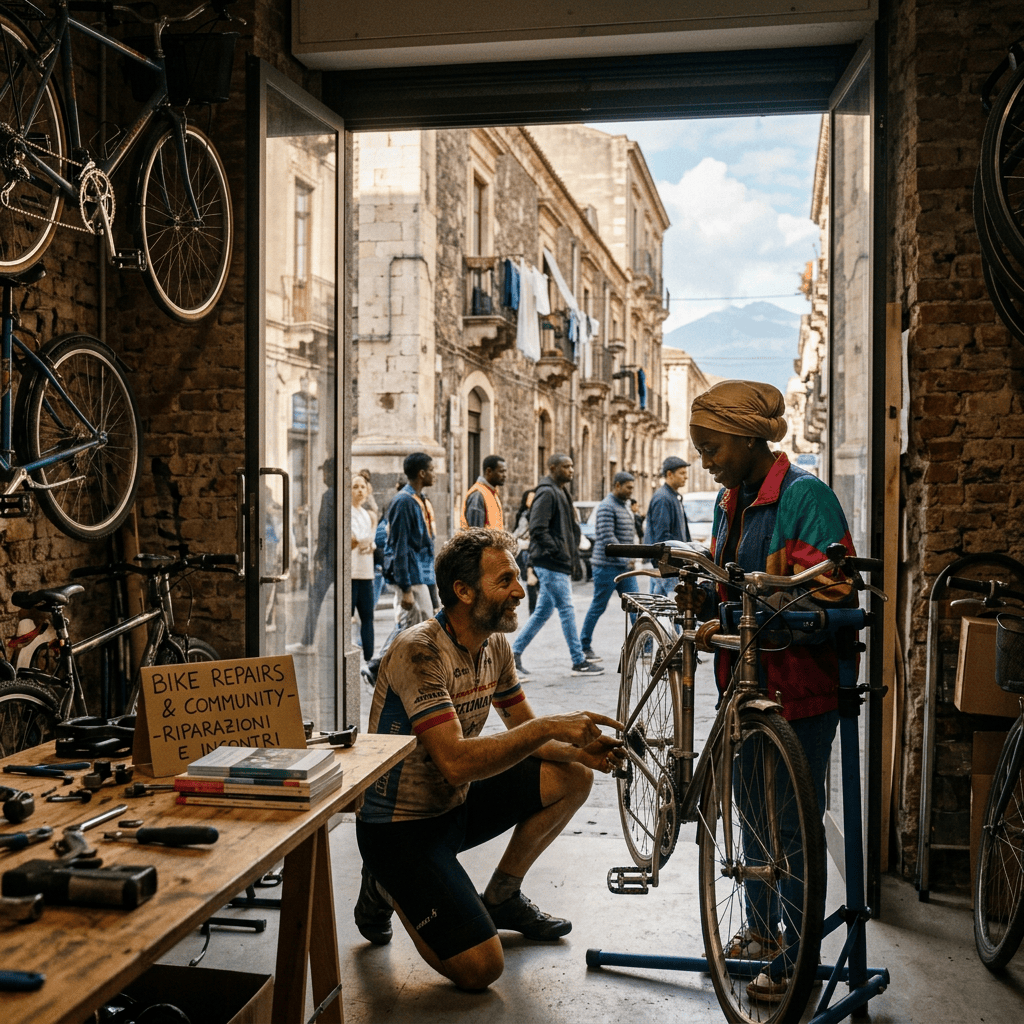
One of the most memorable parts of Joshua’s story is how a bike shop became a natural meeting place for ministry.
At first glance, repairing bicycles and working with people in the neighborhood might not seem like traditional missionary activities. But that is precisely the point. The shop gives Joshua and his team a practical way to serve people, build trust, and create space for conversations that might not happen in a church setting.
The bicycle is a tool. The relationships are the opportunity.
Joshua describes a simple approach to spiritual conversations: listen to someone’s story, share your own, and look for ways to connect those stories with God’s story.
That approach begins with people rather than a program. Instead of treating every interaction as a presentation to deliver, it creates room to listen, understand, and respond to what is happening in someone’s life.
The same principle applies whether the conversation takes place in a bike shop, around a table, on the street, or over a cup of coffee. We do not need to manufacture every opportunity. We need to be present, attentive, and ready to talk about Jesus when the opportunity comes.
Joshua’s experience is a good reminder that ministry tools can be surprisingly ordinary. If it were not bicycles, it could be something else. The important question is how we use what we have in our hands to serve people and point them toward Christ.
Fast Conversations and Slow Trust
Ministry among transient communities is not the only challenge Joshua faces.
While some relationships begin with people who may soon move on, building meaningful relationships with Sicilian neighbors can require a different pace. Trust takes time. Language and cultural differences can make communication difficult, and simply living in a community does not mean we immediately become part of it.
There is a temptation in ministry to measure progress by visible activity: meetings held, people reached, groups started, or plans completed. But relationships do not always develop on our timetable.
For those serving across cultures, presence matters. Learning the language matters. Listening to local believers matters. And so does the willingness to remain in a place long enough for people to see that our interest in them is genuine.
The work among newcomers and the work among local Sicilians may look different, but neither should be treated as less important. Both require us to pay attention to the people God has placed around us and to consider how discipleship can take root in their actual circumstances.
That also means resisting the idea that one ministry model will work everywhere. What helps someone who may leave Sicily in a few weeks may not be the best approach for a Sicilian neighbor who is only beginning to trust us after years of contact.
Faithfulness does not always look the same in every context. We need the wisdom to adjust our approach without losing sight of the purpose.
Working Alongside the Local Church
Joshua’s story also highlights the importance of partnership.
Ministry among migrants and refugees cannot be separated from the wider life of the local community. Nor should outside workers assume that they can meet every need or build sustainable ministry on their own.
Local believers bring relationships, cultural understanding, language, and a long-term presence. Outside workers can contribute experience, resources, encouragement, and new opportunities for collaboration. When these relationships are healthy, the goal is not to build a separate work that depends on outsiders. It is to help equip and strengthen the church to participate in what God is doing.
This is especially important when new believers need a community that can support them after the person who first shared the gospel with them is no longer nearby.
We want more than isolated conversions or temporary connections. We want disciples who grow in faith, become part of healthy Christian communities, and learn to help others follow Jesus.
That kind of multiplication requires us to think beyond our own immediate relationships and invest in a wider network of believers who can walk together in the work.
Holding Our Plans with Open Hands
Cross-cultural ministry also has a way of exposing how little control we really have.
Joshua reflects on the adjustments that come with moving a family to another country: learning a language, navigating bureaucracy, settling into a new community, and discovering that life rarely follows the timeline we imagined.
Even good plans can change. Opportunities appear unexpectedly. Relationships develop in ways we did not anticipate. Sometimes the next step becomes clear only after the previous one has taken us somewhere we never intended to go.
This is not an argument against planning. Preparation and wise stewardship matter. But there is a difference between making plans and insisting that God must work through them exactly as we imagined.
An open-handed approach allows us to work diligently while remaining responsive to the people and opportunities in front of us. It gives us room to recognize that the ministry God is building may look different from the one we originally pictured.
Sometimes the unexpected opportunity is the one that opens a door.
Turning a Cycling Trip into Discipleship Training
Joshua’s work also extends beyond the bike shop. In our conversation, he describes a cycling initiative connected to the Sicily Divide route that combines fundraising with practical training in disciple-making.
The idea brings together people who share an interest in cycling and a desire to help others follow Jesus. Along the way, participants can learn and practice how to start spiritual conversations, share their stories, and equip others to do the same.
It is an example of the same principle at work: an ordinary interest can become a setting for relationships, service, and spiritual growth.
The wider purpose is not simply to raise funds or complete a challenging ride. It is to build relationships with people who can catch the vision for ministry in Sicily, continue supporting the work, and help equip more disciple-makers.
This kind of creativity matters. We do not need to make every ministry opportunity look alike. We need to ask how the gifts, interests, and relationships God has already given us can serve his purposes.
The Constant Is Change. The Mission Remains.
Joshua’s experience in Catania brings us back to the question we started with: How do we make disciples in a changing mission field?
We learn to listen before assuming we understand. We recognize that transient communities and long-term neighbors may require different approaches. We value local churches and the relationships that make lasting discipleship possible. And we hold our plans with open hands, trusting God to direct us as we serve.
At Mission Sicily, our focus remains straightforward: making disciples, strengthening and planting churches, and building bridges of hope across cultures.
The people around us may change. The tools we use may change. The pace and shape of ministry may change. But the call to follow Jesus, help others follow him, and equip disciples who make disciples remains.
The deeper question is not simply how we reach more people. It is how we help people grow into mature disciples who can help others follow Jesus, wherever their journey takes them.
That is work we cannot do alone. It takes prayer, partnership, patience, and a willingness to learn from the people God has already placed in our lives.
Listen to the Conversation
This article is based on my conversation with Joshua Holmes on the Mission Sicily Podcast. We discuss life and ministry in Catania, the changing communities of Sicily, the role of Agape Bici, cross-cultural discipleship, and the importance of holding our plans with open hands.
Listen to the episode: Changing Gears: Making Disciples in a Changing Sicily
Learn more about Joshua’s work through Agape Bici, Search Party, and his Mission Sicily partner page.
For more stories and reflections on ministry in Italy, explore the Mission Sicily website and the related podcast conversations:
- 15 Years Later: Were They Right About Italy?
- 15 Years Later: What an Italian Missionary Thinks About Ministry in Italy
Together, we’re making disciples, strengthening and planting churches, and building bridges of hope in Sicily.
